How Does a Lithium-Ion Battery Actually Work?
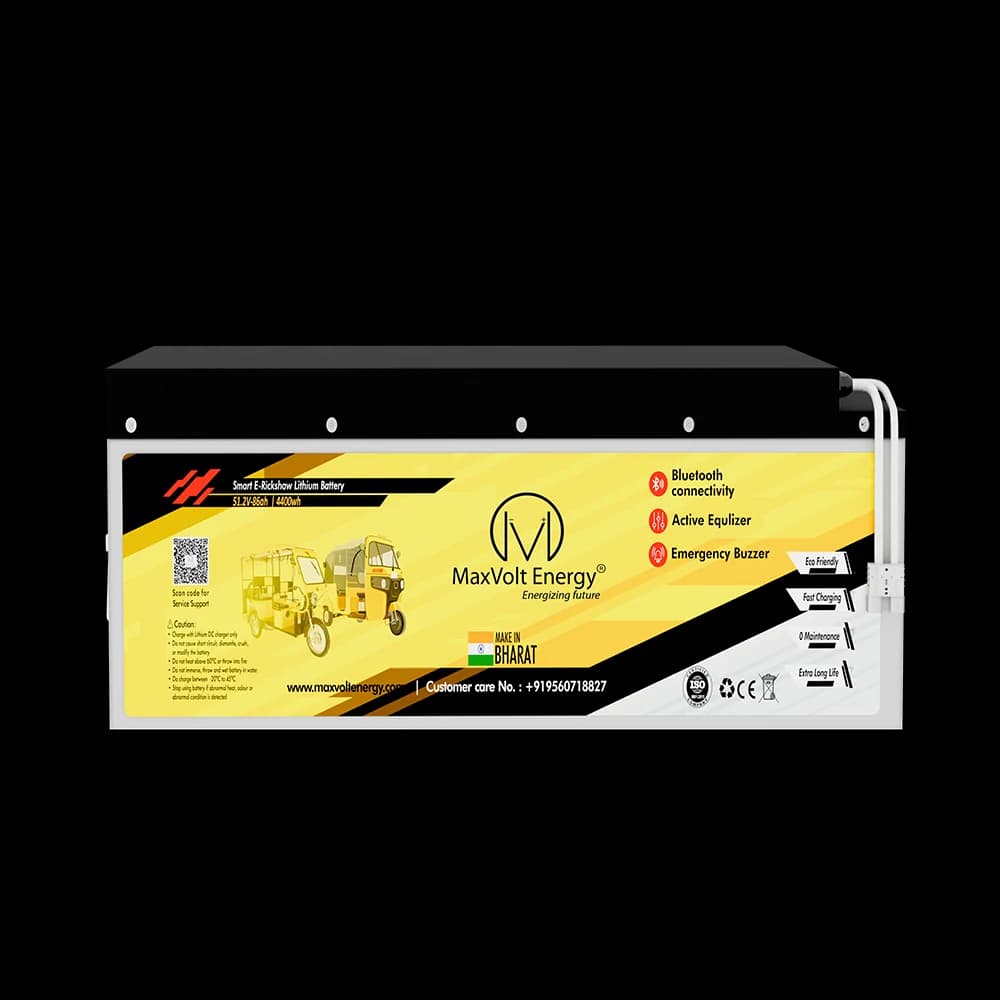
Lithium-ion batteries power everything from e-rickshaws to home inverters — but how do they actually store and release energy? Here's the mechanism, explained simply.
Every lithium-ion battery — whether it's powering an e-rickshaw, a home inverter or a rooftop solar system — works on the same basic principle: lithium ions moving back and forth between two electrodes, carrying electrical charge with them each time.
Inside a cell there are two electrodes: a cathode (often a lithium-based compound such as LiFePO4 or NMC) and an anode (typically graphite). Between them sits an electrolyte — a medium that lets lithium ions pass through, but not electrons. A thin separator keeps the electrodes from touching directly, which would short the cell.
When you charge the battery, an external current forces lithium ions to move from the cathode through the electrolyte to the anode, where they're stored. When you discharge — powering a motor, an inverter, anything — the ions travel back to the cathode. That reverse movement pushes electrons through the external circuit (your device), which is what actually does the electrical work. The ions themselves don't power your device directly; their movement is what drives the electron flow that does.
This back-and-forth is why lithium-ion batteries are "rechargeable" in the true sense — the chemical reaction is reversible thousands of times, unlike a disposable battery where the reaction only runs one way. Each full charge-discharge cycle causes very slight, gradual wear at the electrode level, which is why every lithium battery has a rated cycle life rather than lasting forever.
A Battery Management System (BMS) sits alongside this chemistry to keep it safe and efficient — monitoring voltage, current and temperature, balancing individual cells within a multi-cell pack, and cutting off charge or discharge if something moves outside a safe range. The chemistry makes the energy storage possible; the BMS is what makes it safe and reliable to use every single day.
Understanding this mechanism is useful beyond curiosity — it explains why lithium batteries need to stay within certain temperature and voltage ranges, why deep discharges accelerate wear, and why a genuine BMS isn't optional on any pack you trust with daily use.