Inside a Lithium Battery Pack: Cells, BMS and Protection Circuit Explained
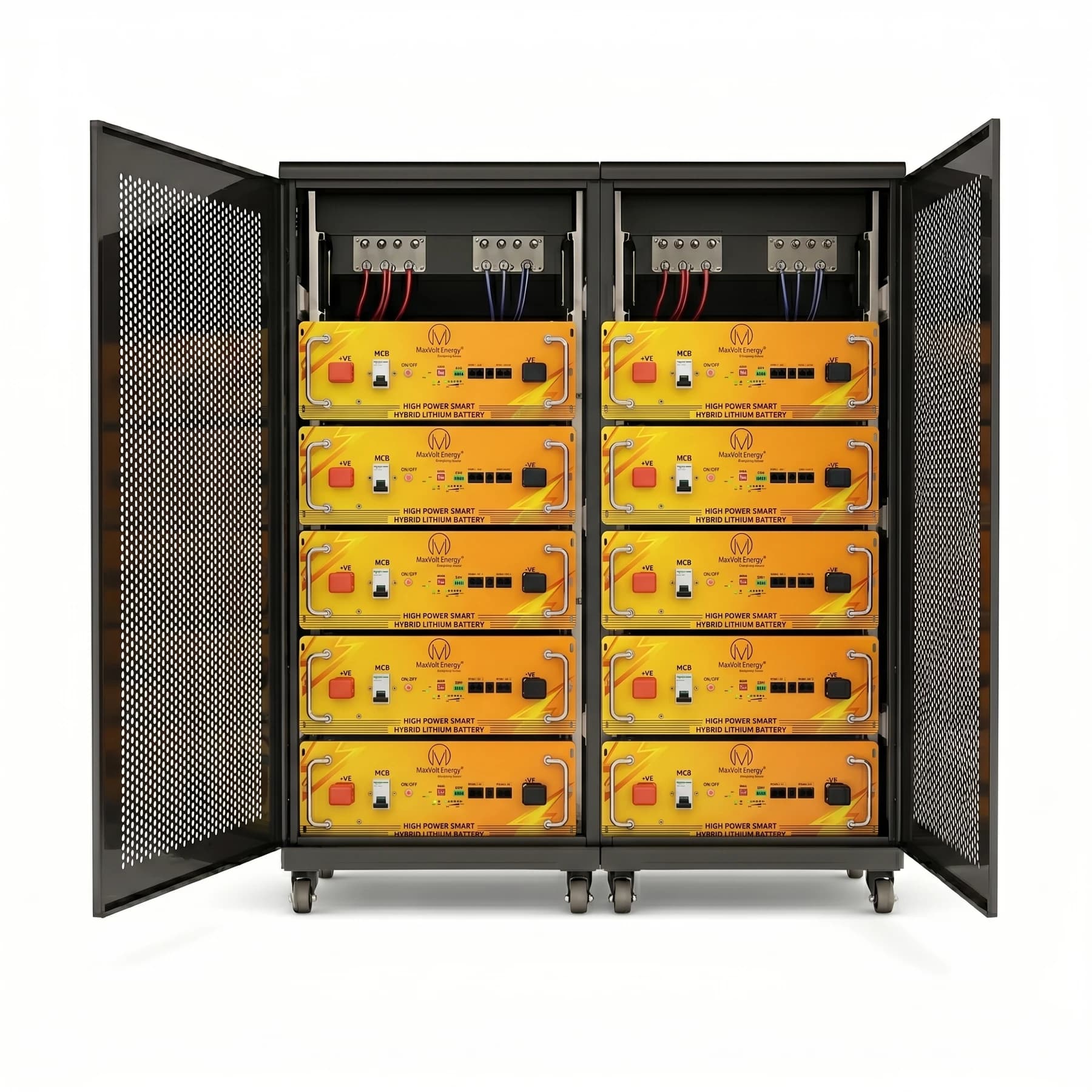
A finished lithium battery pack is more than a stack of cells — the Battery Management System and protection circuitry are what actually make it safe to use every day. Here's how the pieces fit together.
A lithium battery pack looks simple from the outside — a sealed case with two terminals — but what's inside is a small system of parts working together, not just a block of cells. Understanding the pieces helps explain why pack quality varies so much between manufacturers even at the same headline Ah rating.
At the core are the cells themselves, each with a cathode (a lithium compound such as LiFePO4 or NMC) and an anode (typically graphite), separated by a thin insulating layer and immersed in an electrolyte that lets lithium ions move between them during charge and discharge. Multiple cells are connected in series and parallel to reach the pack's target voltage and capacity — a 51.2V pack, for instance, is built from a specific series count of individual LiFePO4 cells, each nominally around 3.2V.
Wrapping around those cells is the Battery Management System (BMS) — the electronics that monitor every cell's voltage and temperature, balance charge across cells so no single weak cell limits the whole pack, and manage the charge/discharge process within safe limits. A "Smart BMS" adds real-time app monitoring on top of this baseline protection, giving visibility into charge state and health without opening the pack.
Sitting between the cells and the outside world is the Protection Circuit Board (PCB) — the hardware layer that physically interrupts current if the BMS detects an unsafe condition: overcharge, over-discharge, short-circuit or excessive temperature. This is the last line of defense, and it's why a pack's protection circuit quality matters as much as its cell grade — a great cell behind a weak protection circuit is still an unsafe pack.
Finally, the physical build — casing material, connector quality, vibration and thermal design — determines how well all of the above survives real-world conditions: vibration in a vehicle, heat in an outdoor installation, or years of daily cycling in commercial use. A pack engineered to AIS 156 and ISO 9001 standards has been tested at each of these layers, not just on paper capacity — which is the real reason certification matters more than any single spec number.