Maxvolt Energy Announces ₹700 Crore Investment in Advanced Battery Manufacturing Plant in Aligarh

Maxvolt Energy Industries Limited has announced a ₹700 crore investment to build a 10 GWh lithium battery manufacturing facility in Aligarh, Uttar Pradesh — taking planned capacity to 12.5 GWh with the Duhai plant.
Maxvolt Energy Industries Limited has announced a ₹700 crore investment to establish an advanced battery manufacturing facility in Aligarh, Uttar Pradesh, marking a significant milestone in the company’s expansion and its long-term commitment to India’s clean-energy ecosystem.
Powering India’s Energy Transition from Uttar Pradesh
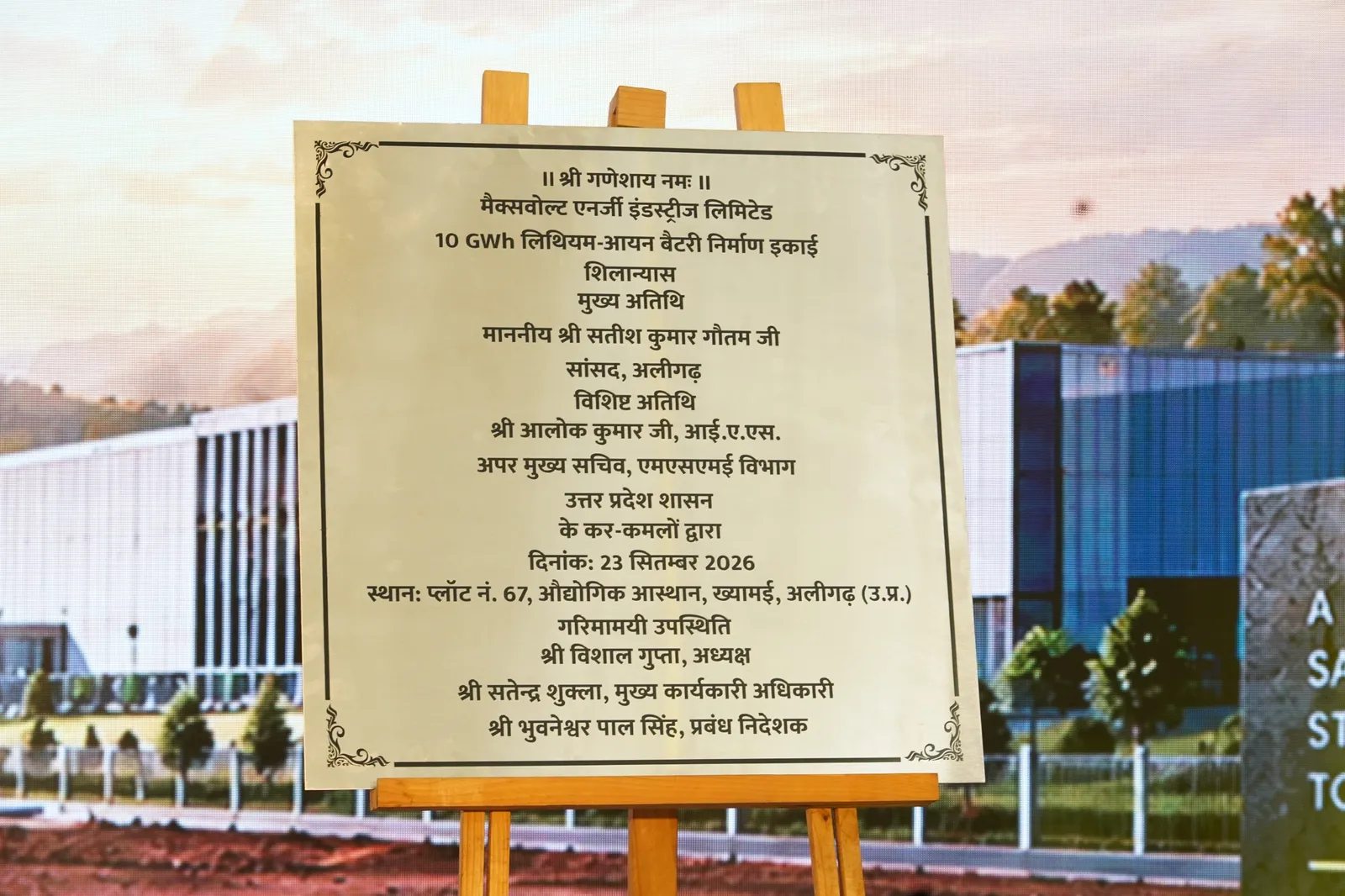
The foundation ceremony for the upcoming facility marks the beginning of a new chapter in Maxvolt’s journey—from building advanced battery packs to creating a larger, integrated manufacturing ecosystem capable of serving the rapidly growing requirements of electric mobility, energy storage and other critical applications.
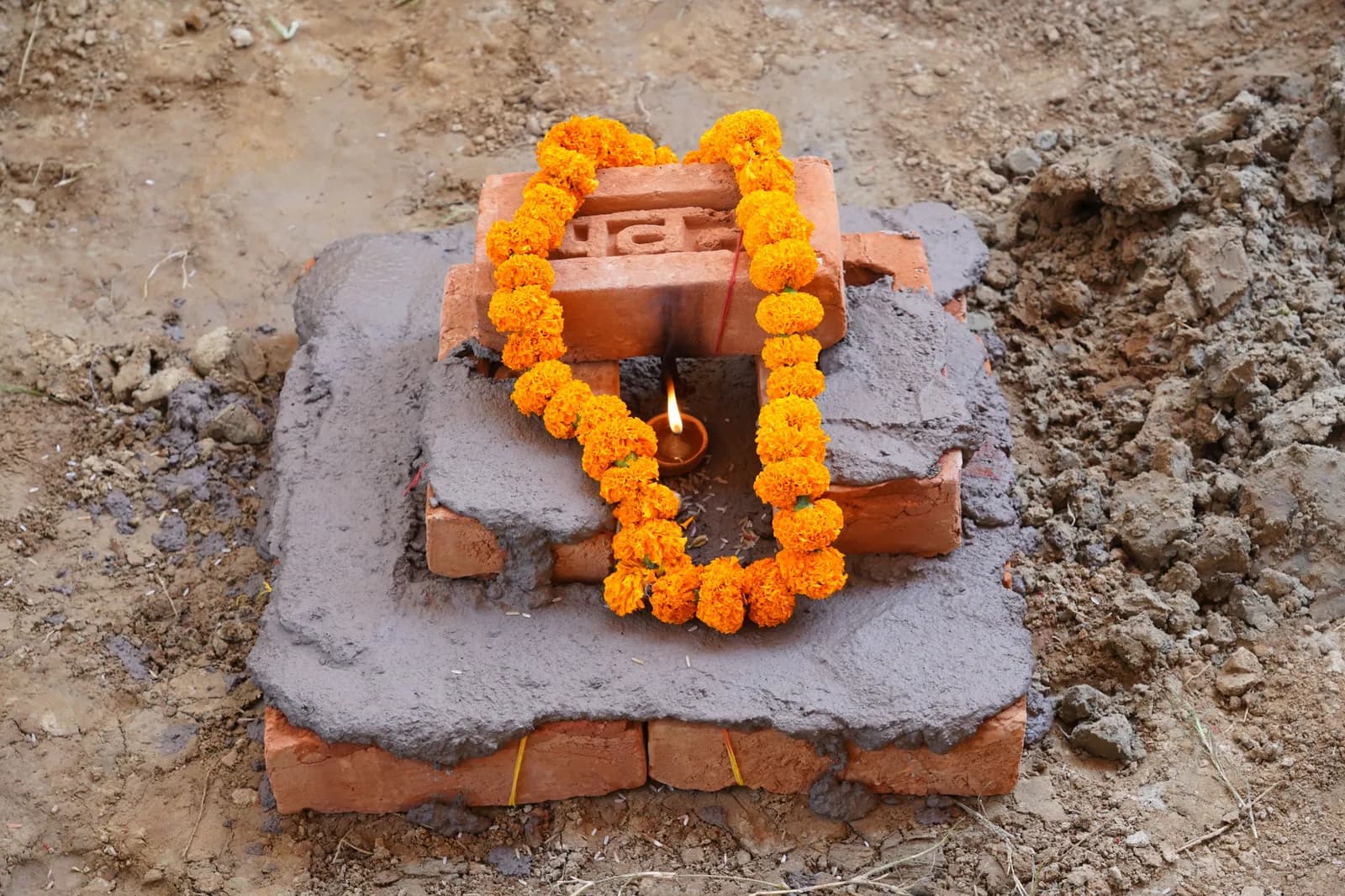
Spread across approximately six acres (23,576 sq. metres), the Aligarh facility is planned to be developed in two phases of 5 GWh each, with a total planned manufacturing capacity of 10 GWh annually at the site. Together with Maxvolt’s operational Duhai facility, the company’s planned manufacturing footprint is expected to reach 12.5 GWh of annual capacity.

Building Capacity for the Next Phase of India's Energy Transition
India’s transition towards electric mobility and renewable energy is creating a growing need for reliable, scalable and locally manufactured energy-storage solutions.
The Aligarh facility has been planned to address this opportunity across multiple applications, including:
- Electric mobility
- Energy Storage Systems (ESS)
- Telecom
- Power backup
- OEM applications
- Four-wheeler electric mobility
The facility is also planned to support a broad range of battery solutions, with capabilities spanning applications from 1 kW to 5 MW. The project will incorporate advanced Battery Management System (BMS) capabilities supporting conventional charging as well as higher-power fast-charging applications.
Two-Phase Expansion, Built for Scale
The Aligarh project will be developed in two phases, with each phase planned to contribute 5 GWh of annual manufacturing capacity.
This phased approach allows Maxvolt to expand manufacturing capacity progressively while building the infrastructure required to serve emerging market segments.
The first phase is targeted for completion within approximately 18–24 months, according to recent company statements reported by industry media.
With the planned expansion, Maxvolt will strengthen its ability to serve customers across different segments while creating greater manufacturing depth within India's domestic battery ecosystem.
Creating Opportunities in Aligarh and Beyond
Beyond manufacturing capacity, the project is expected to contribute to the industrial and economic development of the region.
The facility is expected to create 1500-2000 direct employment opportunities as well as a wider ecosystem of 6000 – 7000 indirect employment across manufacturing, engineering, operations, logistics, maintenance, supply chain and allied services. Industry reports have estimated the potential for thousands of direct and indirect opportunities as the project scales.
For Aligarh, the project represents an opportunity to participate more actively in India's rapidly developing electric mobility and advanced energy-storage ecosystem.
From Battery Manufacturing to a Complete Energy Ecosystem
The Aligarh investment is part of Maxvolt Energy's broader vision of building an integrated energy ecosystem in India.
The company has been expanding beyond conventional battery-pack manufacturing into energy storage, advanced battery technologies and battery recycling. Maxvolt has also established Maxvolt ReEarth, a dedicated subsidiary focused on developing a closed-loop lithium battery recycling ecosystem and recovering critical materials such as lithium, cobalt, nickel and manganese.
This combination of manufacturing, energy storage, research and recycling is aimed at creating a more resilient and sustainable battery value chain—where batteries are not simply manufactured and consumed, but become part of a longer-term circular ecosystem.
Strengthening India's Domestic Battery Ecosystem
The transition to electric mobility and renewable energy requires more than increasing battery demand. It requires strong domestic capabilities across manufacturing, technology, quality, supply chains, energy storage and recycling.
Through the Aligarh project, Maxvolt Energy is investing in that larger ecosystem.
The facility will add significant manufacturing capacity while supporting the company's expansion into new battery applications and market segments. It also strengthens Maxvolt's long-term objective of contributing to India's ambitions for cleaner transportation, greater energy resilience and a stronger domestic clean-energy manufacturing base.
A Major Milestone for Maxvolt Energy
From its beginnings in Ghaziabad, Maxvolt Energy has continued to expand its manufacturing capabilities and product portfolio in line with the evolving requirements of India's energy market.
The Aligarh project represents another important milestone in that journey.
With ₹700 crore of planned investment, 10 GWh of planned capacity at the new facility, and a broader focus spanning electric mobility, energy storage, telecom, power backup and OEM applications, Maxvolt is preparing for the next phase of India's energy transition.
The vision is clear: build in India, innovate for India, and create energy solutions for a cleaner and more resilient future.