Understanding Battery Voltage: 12V, 24V, 48V and 51.2V Explained
Voltage numbers on a battery spec sheet aren't arbitrary — they're set by what the battery has to power. Here's what each common voltage actually means and where it's used.
Battery voltage confuses a lot of first-time buyers, partly because — unlike capacity — a higher number isn't automatically "better." Voltage has to match the system the battery is powering, full stop.
12V and 12.8V batteries are the entry point, commonly used for smaller inverter setups, single-room backup, and light electronic devices. 12.8V specifically shows up in lithium (LiFePO4) batteries because a 4-cell LiFePO4 pack's nominal voltage lands just above the traditional 12V lead-acid standard — close enough to be compatible with equipment built around 12V lead-acid, while reflecting the slightly different lithium cell chemistry underneath.
24V and 25.6V follow the same logic one tier up — an 8-cell LiFePO4 pack — and are common in mid-sized inverter systems and some e-mobility applications where more power is needed than a 12V system comfortably delivers.
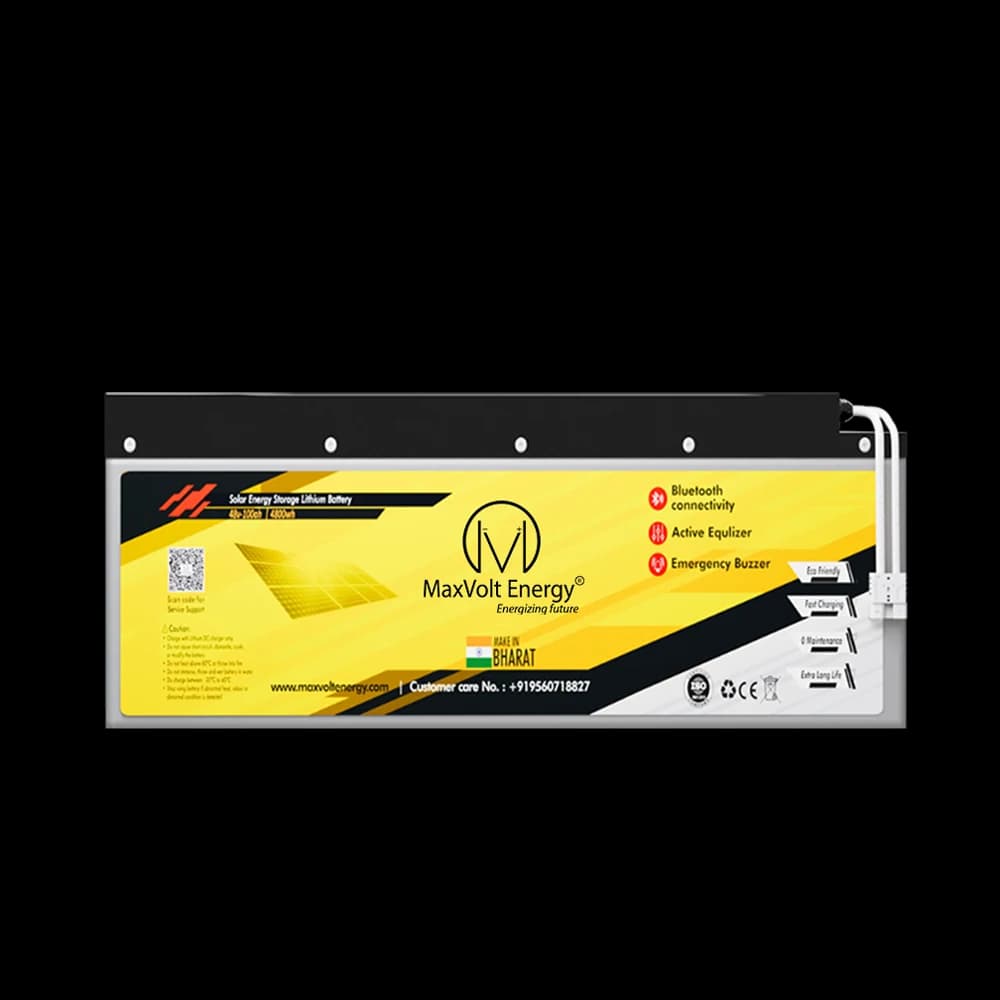
48V and 51.2V are the standard for higher-power applications: larger home and commercial inverters, solar storage systems, and — notably — most Indian e-rickshaws, which standardize around 51V-class packs because that's what the motor and controller ecosystem for that vehicle category is built around. Higher voltage at a given power level means lower current, which reduces resistive losses in the wiring — part of why larger systems favor higher voltage.
The practical rule for buyers: never choose voltage based on "more must be better." Match it exactly to what your inverter, controller or vehicle specifies — a mismatch isn't a performance question, it's a compatibility one, and using the wrong voltage can damage the equipment on either end. Capacity (Ah) is the number to shop around within, once voltage is fixed by your system.