Lithium Battery Total Cost of Ownership
How to calculate the true total cost of ownership for a lithium battery versus lead-acid.
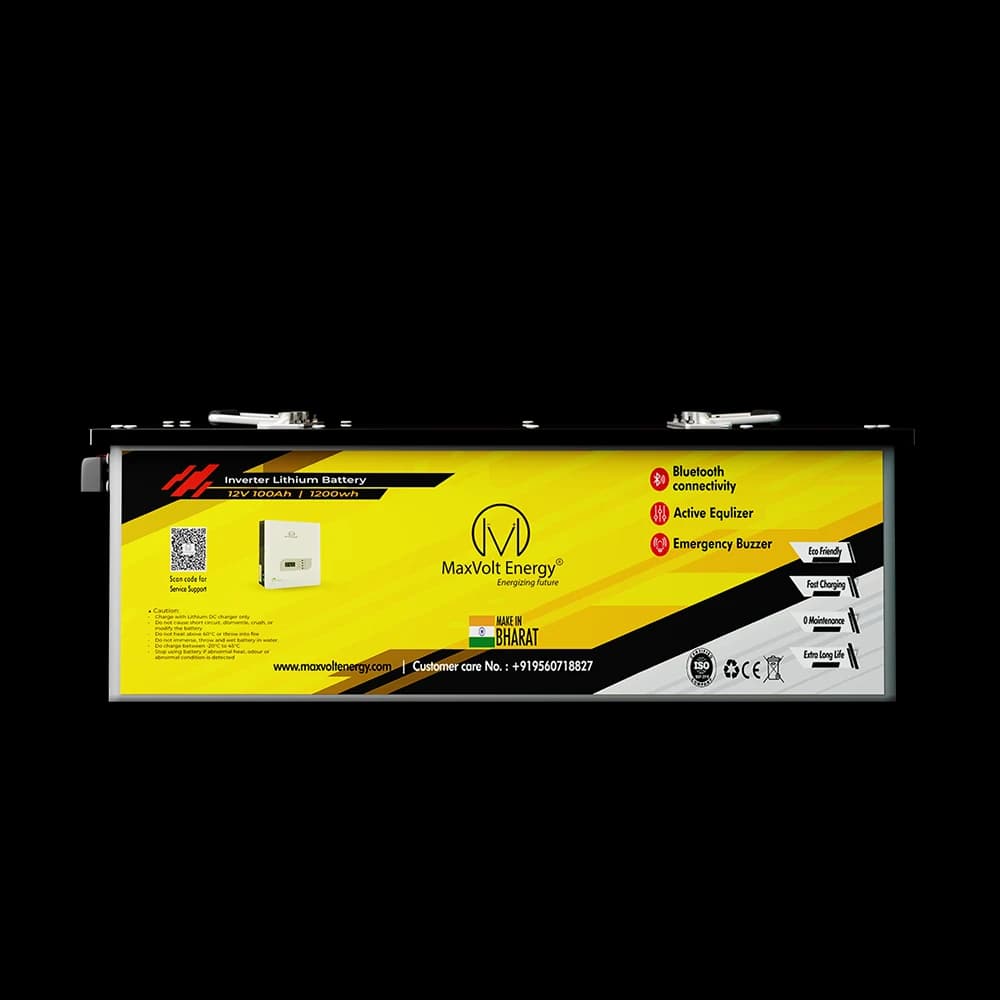
Comparing battery chemistries by upfront price alone consistently favors lead-acid, since lithium's higher purchase cost is the most visible number. But total cost of ownership (TCO) — factoring in replacements, maintenance, downtime and efficiency over the full useful life of the equipment — frequently tells a different story.
The five components of a real TCO calculation
1) Upfront purchase price. 2) Replacement cost, multiplied by how many replacements you'll need over your planning horizon (lead-acid's shorter cycle life means more replacements over the same period). 3) Maintenance cost — water, terminal cleaning and associated labor for lead-acid, effectively zero for lithium. 4) Downtime cost — charging time and any lost productivity or income during that time, which matters most for commercial/income-generating equipment. 5) Efficiency losses — lithium's higher round-trip efficiency (>95% vs ~80-85% for lead-acid) means less wasted energy per charge cycle over the equipment's life.
A worked example: 8-year home inverter TCO
A tubular lead-acid battery lasting ~3-4 years needs roughly 2 replacements over 8 years; a lithium battery rated for 3,000+ cycles typically lasts the full 8-10 years without replacement. Add in the lithium battery's zero water-maintenance cost and higher efficiency, and the gap between the two chemistries' upfront prices often narrows substantially, or reverses, once measured over the full 8-year horizon rather than at time of purchase.
When lead-acid's lower upfront cost still wins
For short planning horizons (a temporary installation, a resale-imminent property), for very low daily-cycling applications where lead-acid's cycle-life disadvantage matters less, or when upfront capital constraint genuinely outweighs long-term savings, lead-acid's lower purchase price can still be the right practical choice. TCO is a framework for an honest comparison, not an argument that lithium always wins.
Frequently Asked Questions
How long does it typically take for lithium's TCO advantage to catch up to its higher price?
It varies by application and usage intensity, but for daily-cycled equipment (inverters, EVs), the break-even point is commonly within 2-4 years, with net savings accumulating afterward for the remainder of the equipment's life.
Does TCO calculation change for commercial/fleet use versus home use?
Yes — commercial use typically has a higher downtime cost (lost income during charging or from breakdowns), which tends to favor lithium's faster charging and higher reliability more strongly than a home-use TCO calculation would.
Is there a simple way to estimate my own TCO?
Our EV Battery ROI Calculator walks through this calculation for EV applications; for home inverter batteries, compare (lead-acid price × expected number of replacements + maintenance cost) against (lithium price + zero maintenance) over your planning horizon.
Have a Question About Lithium Battery Total Cost of Ownership (TCO)?
Talk to our team for sizing help, pricing, or technical guidance — no obligation.