Telecom Tower Battery Backup Guide
How telecom infrastructure backup power works, and why the industry is shifting from lead-acid to lithium.
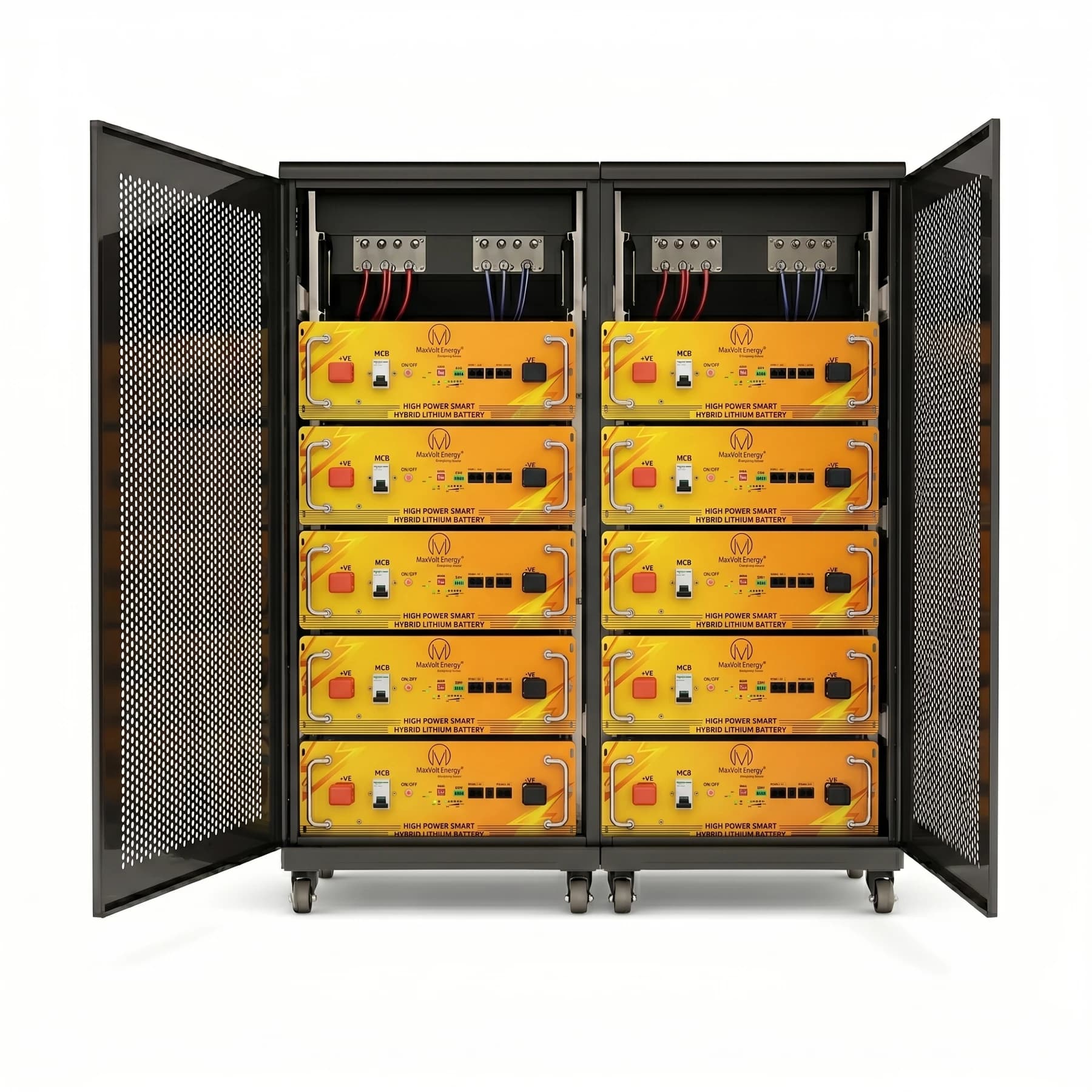
Telecom towers in India need continuous power — grid outages cannot mean dropped calls or lost data connectivity. That reliability requirement, combined with rising real-estate and maintenance costs at remote tower sites, is driving telecom infrastructure operators to reconsider backup battery chemistry. Maxvolt Energy has discussed this shift publicly, noting that energy storage adoption is growing across commercial, industrial and telecom facilities alongside solar-powered applications, as part of a broader move toward treating battery storage as core infrastructure rather than backup-only equipment.
Why lead-acid has been the historical default
VRLA (Valve-Regulated Lead-Acid) batteries have powered telecom backup for decades due to established supply chains and lower upfront unit cost. But at remote, hard-to-access tower sites, their shorter cycle life, sensitivity to high ambient temperature (common at tower sites without climate control), and heavier weight (a real cost factor for tower-top or difficult-access installations) add up in total operating cost.
Why lithium is gaining ground in telecom backup
LiFePO4 lithium batteries tolerate a wider temperature range with less capacity degradation, weigh significantly less than an equivalent-capacity VRLA bank (a meaningful factor for site logistics and structural loading), and deliver far more charge cycles — reducing the frequency of costly site visits for battery replacement, which is a major operating-cost driver for infrastructure spread across thousands of remote locations.
A rack-mount, modular lithium system — like Maxvolt's Rack Type Battery, custom-engineered per site at 48V/96V/120V — fits naturally into telecom shelter/cabinet form factors already standardized around rack dimensions.
What matters most for telecom-grade backup
Wide operating temperature tolerance (tower sites often lack climate control), remote monitoring capability (critical when sites are geographically dispersed and hard to visit), a robust BMS with thermal protection, and a service/support relationship that can respond across a distributed site network — not just a one-time equipment sale.
Frequently Asked Questions
Why is battery weight a significant factor for telecom towers specifically?
Many tower sites have structural load limits, difficult access (sometimes requiring manual carrying of equipment), and installation constraints that make a lighter lithium battery bank meaningfully easier and cheaper to deploy and service than an equivalent-capacity lead-acid bank.
Can lithium batteries handle the temperature extremes at remote tower sites?
LiFePO4 chemistry tolerates a wider operating temperature range than lead-acid with less capacity loss, though extreme sustained heat still affects any battery chemistry — proper enclosure design and, where feasible, basic thermal management remain important regardless of chemistry.
Does Maxvolt supply telecom operators directly?
Maxvolt has discussed growing energy-storage adoption across commercial, industrial and telecom-adjacent applications in industry commentary. For telecom-specific deployment requirements, contact our team directly to discuss your site's technical specifications.
Have a Question About Telecom Tower Battery Backup Guide (India)?
Talk to our team for sizing help, pricing, or technical guidance — no obligation.