E-Rickshaw Battery Specifications Explained
How to read an e-rickshaw lithium battery spec sheet — voltage, Ah, BMS and pack type explained.
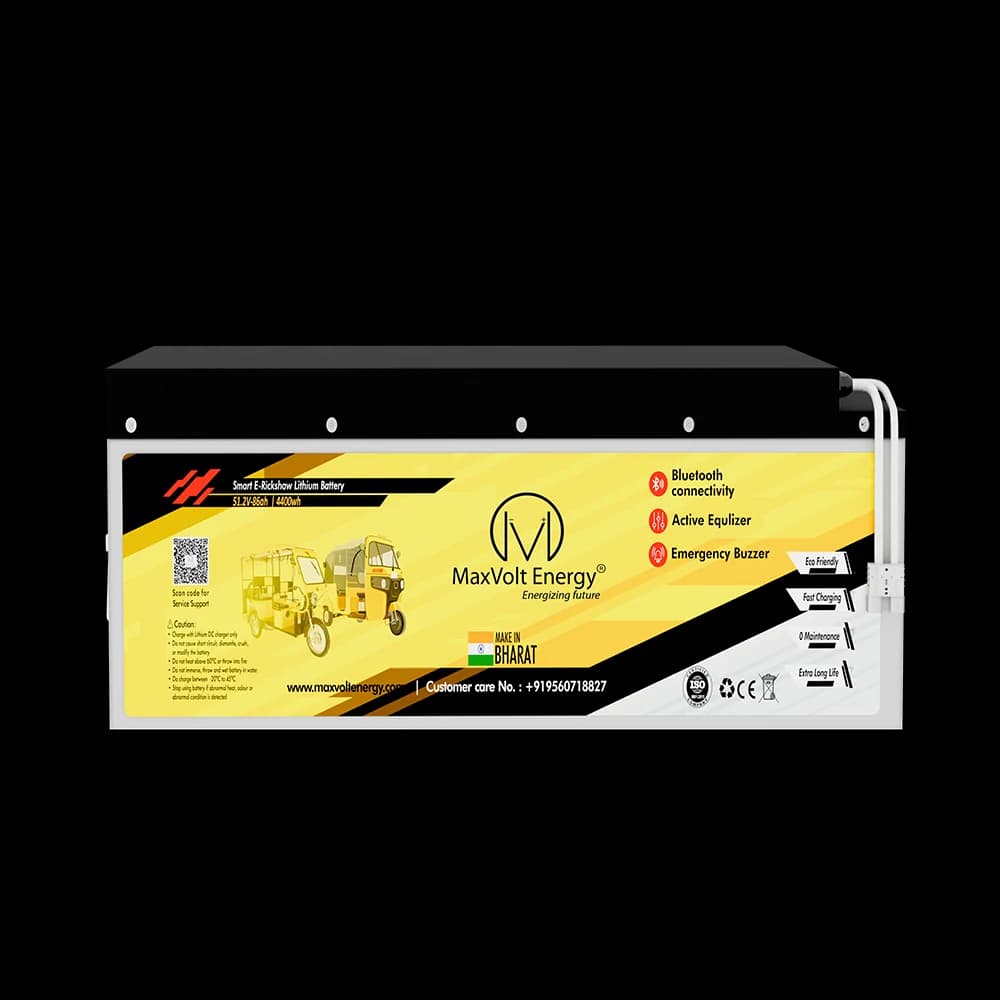
A spec sheet full of voltage, amp-hour and chemistry codes can be hard to translate into "will this work for my vehicle, and how far will it take me." Here's what each number actually means.
Voltage (V) — must match your vehicle exactly
Maxvolt's E-Rickshaw Lithium Battery runs at 51V, the standard voltage for most Indian e-rickshaw platforms. Voltage must match your vehicle's controller and motor system exactly — it is not a spec you can safely upgrade for more performance without a full system change.
Capacity (Ah) — determines your range
Amp-hours (86Ah-100Ah in Maxvolt's range) is the energy storage capacity — higher Ah means more range per charge, at a proportional weight and price increase. Your typical daily distance and number of trips per charge should guide how much capacity you actually need.
Cell chemistry — LiFePO4 and why it's the e-rickshaw standard
LiFePO4 (LFP) is the standard lithium chemistry for e-rickshaws due to its stronger cycle life and thermal stability compared to NMC — valuable in a vehicle used daily for commercial income under Indian ambient heat conditions.
Pack type and BMS — build quality that doesn't show on the spec sheet
A metal-case pack (Maxvolt's design) handles vibration and daily commercial abuse better than a soft-pack or basic plastic enclosure. The Battery Management System (BMS) manages overcharge, over-discharge, short-circuit and thermal protection automatically — ask specifically what protections are built in, since this detail often isn't headline marketing but matters most for daily reliability.
Frequently Asked Questions
What voltage do most Indian e-rickshaws use?
51V is the most common standard, though this varies by vehicle platform — always confirm your specific vehicle's voltage requirement before buying a replacement battery.
Does higher Ah always mean better performance?
Higher Ah means more range and typically more weight and cost — it's a trade-off matched to your actual daily distance needs, not an unconditional upgrade.
What does the BMS actually protect against?
A quality BMS manages overcharging, over-discharging, short-circuits and excessive temperature — all common causes of battery damage or safety incidents if left unmanaged.
Have a Question About E-Rickshaw Battery Specifications Explained?
Talk to our team for sizing help, pricing, or technical guidance — no obligation.