Lead-Acid vs Lithium E-Rickshaw Battery
A detailed side-by-side comparison — charging time, cycle life, weight, and real running cost.
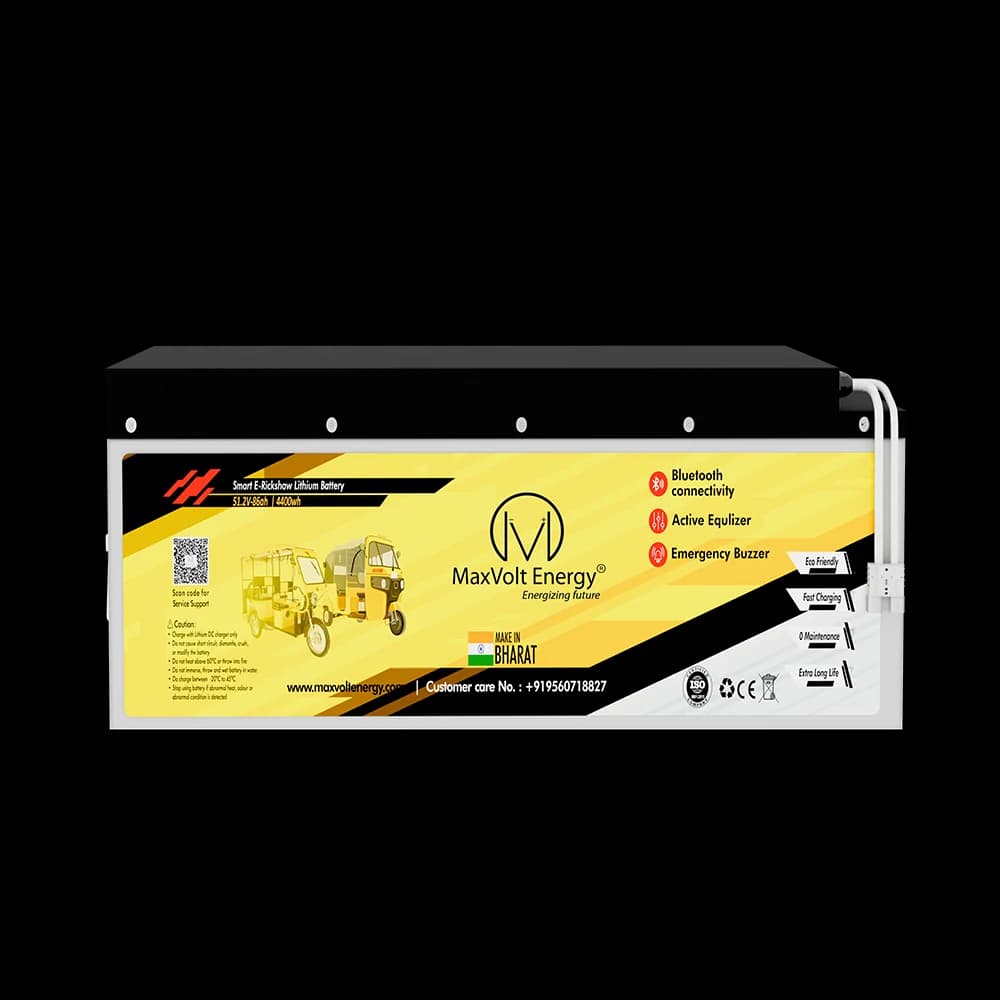
E-rickshaw drivers and fleet operators choosing between lead-acid and lithium batteries are making a decision that directly affects daily earning capacity — charging downtime, range consistency, and replacement frequency all differ substantially between the two chemistries.
Charging time and daily uptime
Lead-acid e-rickshaw batteries typically need 8+ hours to fully charge, often requiring an overnight charge and limiting drivers to one effective charge cycle per day. Lithium packs like Maxvolt's E-Rickshaw Lithium Battery (51V, 86Ah-100Ah, LiFePO4) typically charge in 2-3 hours, allowing a midday top-up and more effective driving hours per day.
Cycle life and replacement frequency
Lead-acid packs typically deliver 300-500 full charge cycles before capacity degrades significantly — for a daily-use vehicle, that's often under 1.5 years. Lithium LiFePO4 packs typically deliver 2,000-3,000+ cycles, translating to 3-5+ years of daily commercial use before replacement.
Weight and range consistency
Lead-acid battery packs are significantly heavier per unit of stored energy, which reduces the vehicle's effective payload capacity and range. Lithium packs are lighter for equivalent capacity, and — unlike lead-acid, which loses effective range noticeably as it ages — hold consistent range across most of their cycle life.
Total cost over the vehicle's working life
Lead-acid's lower upfront cost is typically offset within 2-3 years by more frequent replacements, more downtime for charging, and gradually declining range that reduces trips per day. For a vehicle used commercially every day, lithium's total cost of ownership is frequently lower despite the higher purchase price — see our e-rickshaw operating-cost breakdown for the detailed math.
Lead-Acid vs Lithium E-Rickshaw Battery
| Lead-Acid | Lithium (LiFePO4) | |
|---|---|---|
| Charging time | 8+ hours | 2-3 hours |
| Cycle life | 300-500 cycles | 2,000-3,000+ cycles |
| Typical replacement interval | ~1-1.5 years (daily use) | 3-5+ years (daily use) |
| Weight (equivalent capacity) | Heavier | Significantly lighter |
| Maintenance | Regular water top-up | None |
| Range consistency over life | Declines noticeably | Stays consistent |
Frequently Asked Questions
Can I switch my existing e-rickshaw from lead-acid to lithium?
In many cases yes, if voltage matches and the controller/charger is compatible or upgraded — check with a qualified installer or the battery manufacturer to confirm your specific vehicle's compatibility.
How much faster does a lithium e-rickshaw battery charge?
Typically 2-3 hours versus 8+ hours for lead-acid — enabling a midday recharge that lead-acid's overnight-only charging cycle doesn't allow.
Does lithium really pay for itself despite the higher price?
For daily commercial use, yes in most cases — fewer replacements, less charging downtime, and consistent range typically offset the higher upfront cost within a couple of years. Individual results depend on daily usage patterns and local electricity costs.
Have a Question About Lead-Acid vs Lithium E-Rickshaw Battery?
Talk to our team for sizing help, pricing, or technical guidance — no obligation.