Battery Backup Time & Sizing Guide
How to calculate exactly how long a battery will back up your load, and size accordingly.
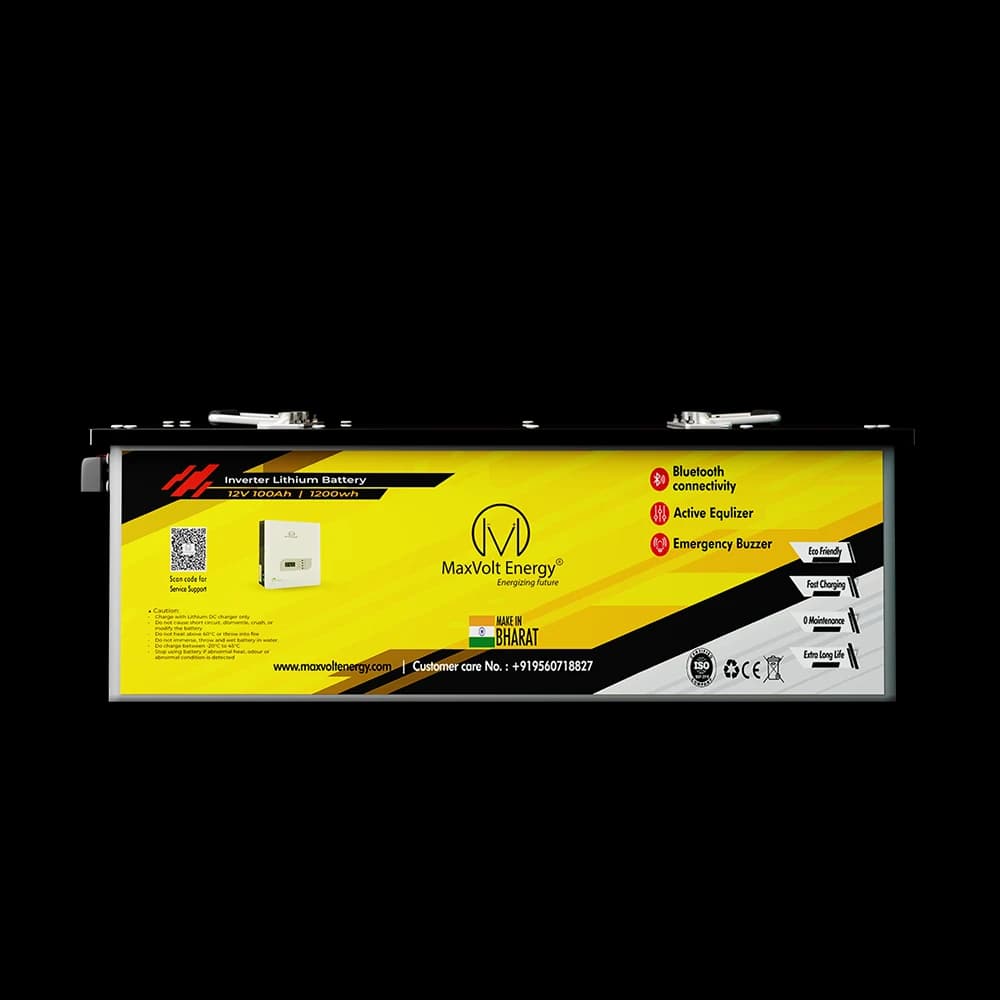
The formula for backup time is simple, but the inputs are easy to get wrong — inverter efficiency, usable depth of discharge, and accurately totaling your connected load all affect the real-world answer more than the battery's nameplate rating alone.
The core formula
Backup time (hours) = (Battery voltage × Ah × usable DoD × inverter efficiency) ÷ Total connected load (watts). For example, a 12V 150Ah lithium battery (90% usable DoD) through an inverter at 90% efficiency, running a 300W load: (12 × 150 × 0.9 × 0.9) ÷ 300 = 4.86 hours.
Why the same battery gives different backup times for different people
Usable DoD varies by chemistry — lithium's 80-100% versus lead-acid's ~50% means a lead-acid battery of the same nameplate Ah delivers roughly half the backup time. Inverter efficiency also varies by model (typically 85-95%), and load estimation errors (forgetting an appliance, or using a device's peak rather than running wattage) are a common source of backup-time surprises.
How to size for a target backup duration
Rearrange the formula: required Ah = (Target hours × Load in watts) ÷ (Voltage × usable DoD × inverter efficiency). Add 15-20% headroom to account for battery aging over time and to avoid deep-discharging the battery on every cycle, which shortens its lifespan.
Frequently Asked Questions
Why does my battery deliver less backup time than the manufacturer's spec suggests?
Manufacturer figures are often based on ideal conditions (full usable DoD, rated inverter efficiency, precise load matching) — real-world load estimation errors, older battery age, and lower actual inverter efficiency all reduce the practical backup time versus the theoretical maximum.
Should I use my appliances' running wattage or peak wattage for sizing?
Use running (continuous) wattage for backup-time calculations, but check that your inverter's peak/surge rating can handle the highest peak wattage among your appliances (motors and compressors draw more at startup) — undersizing for peak can trip the inverter even if running-wattage sizing looks fine.
How much headroom should I add when sizing a battery?
15-20% above your calculated requirement is a reasonable margin to account for battery aging and to avoid habitually deep-discharging the battery, which shortens its cycle life.
Have a Question About Battery Backup Time & Sizing Guide?
Talk to our team for sizing help, pricing, or technical guidance — no obligation.